RDF K9 Search and Rescue Equipment: Combining Canine Expertise with Advanced RF Detection

K9 Search and Rescue teams are among the most effective resources available during emergency response operations. Highly trained search dogs can cover large areas, detect human scent, and operate in environments where traditional search methods may face limitations. However, modern rescue missions increasingly benefit from advanced technology that complements canine capabilities. As a result, RDF K9 search and rescue equipment is becoming an important component of contemporary Search and Rescue operations.
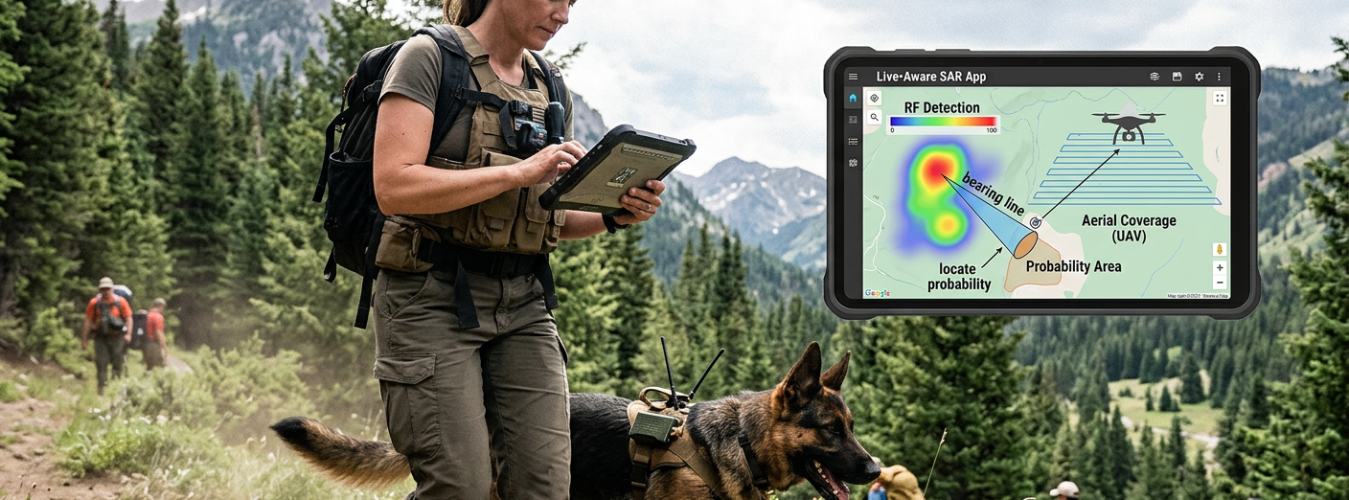
The SAR App combines Radio Direction Finding, RF Detection, AI-powered visualization, and drone integration into a flexible platform that helps K9 teams locate missing persons more efficiently. By adding wireless signal intelligence to traditional canine search methods, rescue organizations can improve situational awareness and increase the likelihood of successful outcomes.
The Evolution of K9 Search and Rescue Equipment
For decades, K9 teams have relied on canine scent detection, handler expertise, GPS tracking systems, and communication tools to conduct search operations. While these resources remain essential, advancements in wireless technology have created new opportunities to support search efforts.
Today, many missing individuals carry devices such as:
- Smartphones
- Smartwatches
- Bluetooth-enabled wearables
- Fitness trackers
- Wireless communication devices
These devices continuously emit signals that can be detected and analyzed using RF Detection technology.
The SAR App leverages this capability to provide K9 teams with an additional source of information during search missions.
Adding Intelligence Beyond Visual Searches
Traditional Search and Rescue operations often depend on visual observation, ground searches, and thermal imaging systems. While effective in many situations, these methods may be limited by environmental conditions, terrain, and visibility challenges.
RDF K9 search and rescue equipment introduces an additional intelligence layer by detecting wireless signal activity emitted from electronic devices carried by missing individuals.
This capability helps teams:
- Narrow search zones
- Improve locate probability
- Increase search efficiency
- Support canine operations
- Reduce search durations
By combining scent detection with wireless signal analysis, responders gain a more comprehensive understanding of search conditions.
AI-Powered Heatmaps Simplify Decision-Making
One of the most valuable features of the SAR App is its AI-powered live heatmap functionality. Raw RF signal data can be difficult to interpret during high-pressure rescue operations, especially when teams must make rapid decisions.
The platform automatically transforms signal detections into intuitive visual displays that highlight areas with increased wireless activity.
Benefits include:
- Real-time situational awareness
- Faster identification of search priorities
- Simplified signal interpretation
- Improved tactical planning
- Enhanced operational coordination
These capabilities allow handlers and command personnel to focus resources more effectively.
Flexible Integration with K9 Teams
A major advantage of modern RDF K9 search and rescue equipment is deployment flexibility. The SAR App features a modular architecture that allows rugged Android devices to function as portable Radio Direction Finder systems.
The technology can be mounted on:
- K9 harnesses
- Search vehicles
- Drones and UAVs
- Survival vests
- Portable field equipment
Because the platform integrates easily into existing workflows, organizations can deploy it without significant operational changes.
This flexibility allows rescue teams to adapt equipment configurations based on mission requirements.
Drone-Assisted Search Operations
Many K9 Search and Rescue organizations now use drones to improve coverage and gather aerial intelligence. Drone-mounted RF scanning technology adds another layer of capability by collecting wireless signal data while surveying large operational areas.
This approach enables teams to:
- Cover more ground in less time
- Identify potential search hotspots
- Improve resource allocation
- Reduce repetitive manual searches
- Increase aerial coverage efficiency
When combined with canine search efforts, drone-assisted RF Detection creates a highly effective search strategy.
Reducing Search Time During Critical Missions
Time is one of the most important factors during Search and Rescue operations. The faster a subject is located, the greater the likelihood of a positive outcome.
The SAR App helps reduce search time by continuously collecting and analyzing signal intelligence from wireless devices. Rather than searching large areas blindly, teams can focus efforts on locations showing signs of electronic activity.
This targeted approach improves operational efficiency while reducing unnecessary resource expenditure.
Lowering Operator Workload
Search and Rescue personnel often operate under physically demanding and emotionally stressful conditions. Interpreting technical RF data manually can add complexity to already challenging missions.
The SAR App simplifies this process by automatically visualizing detections through:
- Heatmaps
- Signal indicators
- Directional information
- Distance estimation tools
By automating data interpretation, the platform lowers operator workload and allows responders to concentrate on mission-critical tasks.
Supporting Multiple Rescue Environments
The versatility of RDF K9 search and rescue equipment makes it valuable across a wide range of operational environments.
Wilderness Search and Rescue
Large forests, mountains, and remote terrain often require extensive canine search efforts supported by signal intelligence.
Urban Search and Rescue
Wireless signal detection can assist teams operating within densely populated areas and complex infrastructure.
Disaster Response
Following natural disasters, K9 teams can use RF Detection technology to identify areas that may contain survivors.
Coastal and Maritime Missions
Signal detection can support shoreline and coastal search operations where locating individuals quickly is essential.
Conclusion
Organizations researching RDF K9 search and rescue equipment require solutions that complement canine capabilities while improving operational efficiency. The SAR App delivers these advantages through advanced RF Detection, Radio Direction Finding technology, AI-powered heatmaps, drone integration, and flexible deployment options. By reducing search time, improving locate probability, increasing aerial coverage efficiency, and lowering operator workload, the SAR App provides a modern and scalable solution for K9 Search and Rescue teams worldwide.